The Foundations of AI Seminar Series is dedicated to topics of interest in artificial intelligence, machine learning, both empirically and theoretically, as well as related areas. Our goal is for these meetings to serve as a forum for discussions and quick dissemination of results. We invite anyone interested in the latest advancements in AI/ML to join us!
Fenchel-Young Generalization of Bayesian Principles

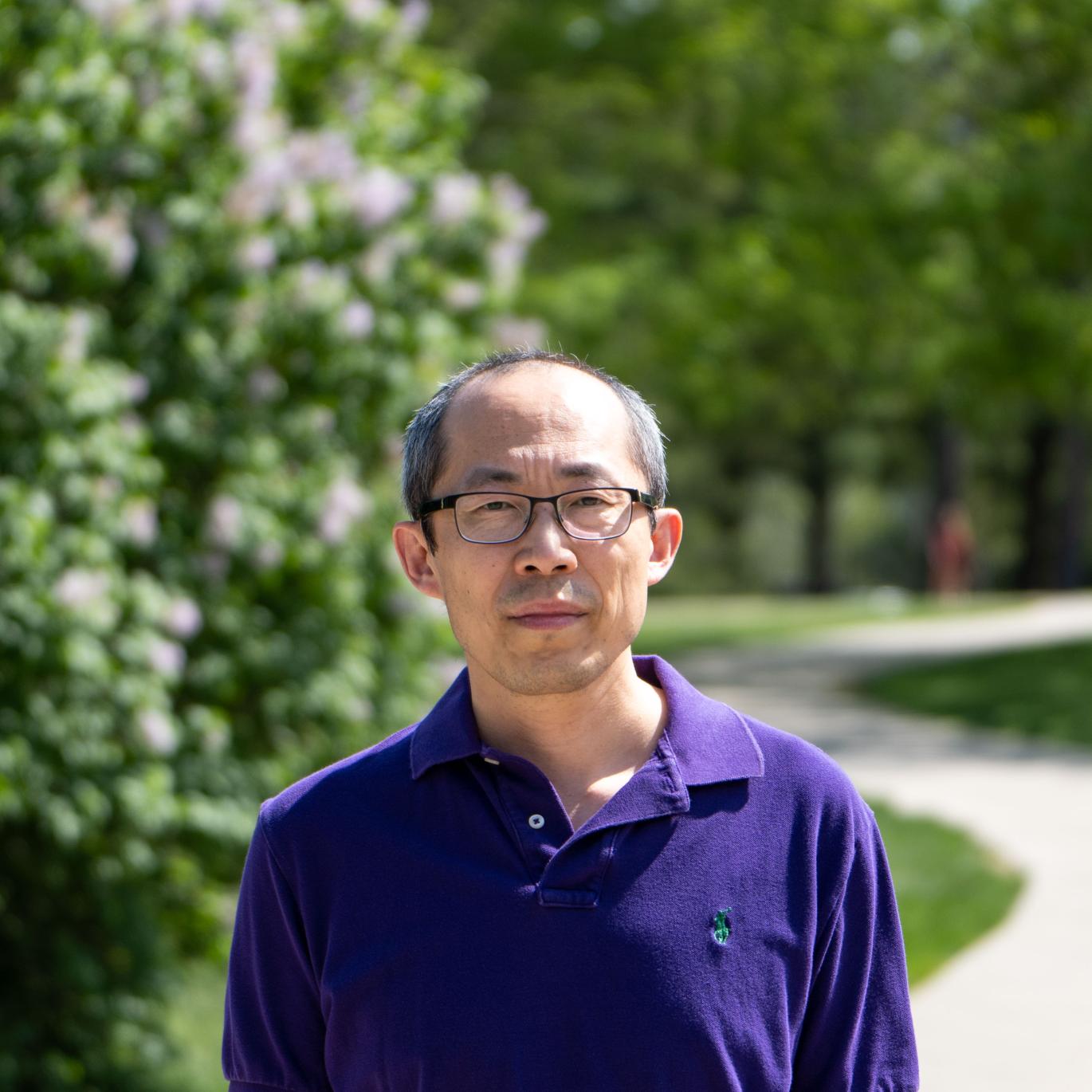
Speaker: Mário Figueiredo, Instituto Superior Técnico (IST), University of Lisbon Date: 08-04-2026, 11am-12pm Location: CS1.04, University of Warwick, Coventry, UK
Abstract
Most statistical learning and inference methods, from standard and variational Bayesian inference to empirical risk minimization, can be unified through a variational perspective that seeks a trade-off between empirical risk and prior knowledge. In this talk, I will describe a new, recently introduced general class of variational methods based on Fenchel-Young (FY) losses that extends and encompasses Bayesian principles. This approach, based on Fenchel conjugation (a central tool of convex analysis), generalizes the Kullback-Leibler divergence and encompasses Bayesian as well as classical variational learning. Furthermore, this framework provides generalized notions of free energy, evidence, evidence lower bound, and posterior, while still enabling standard optimization techniques such as alternating minimization and gradient backpropagation, allowing to learn broader class of models than previous variational formulations.
About Mário Figueiredo
Mário Figueiredo is an IST Distinguished Professor and holder of the Feedzai Chair on Machine Learning at Instituto Superior Técnico (IST), University of Lisbon. He also serves as a group leader at Instituto de Telecomunicações and is the Director of the ELLIS Unit Lisbon. His research career spans a broad range of topics, including statistical machine learning, image processing, optimization, inverse problems, and causal inference and discovery. He is a Fellow of the IEEE, IAPR, EURASIP, and ELLIS. His contributions have been recognized with the EURASIP Individual Technical Achievement Award, the IEEE W. R. G. Baker Award, and the IAPR Pierre Devijver Award. He is a member of the Lisbon Academy of Sciences and the Portuguese Academy of Engineering.